


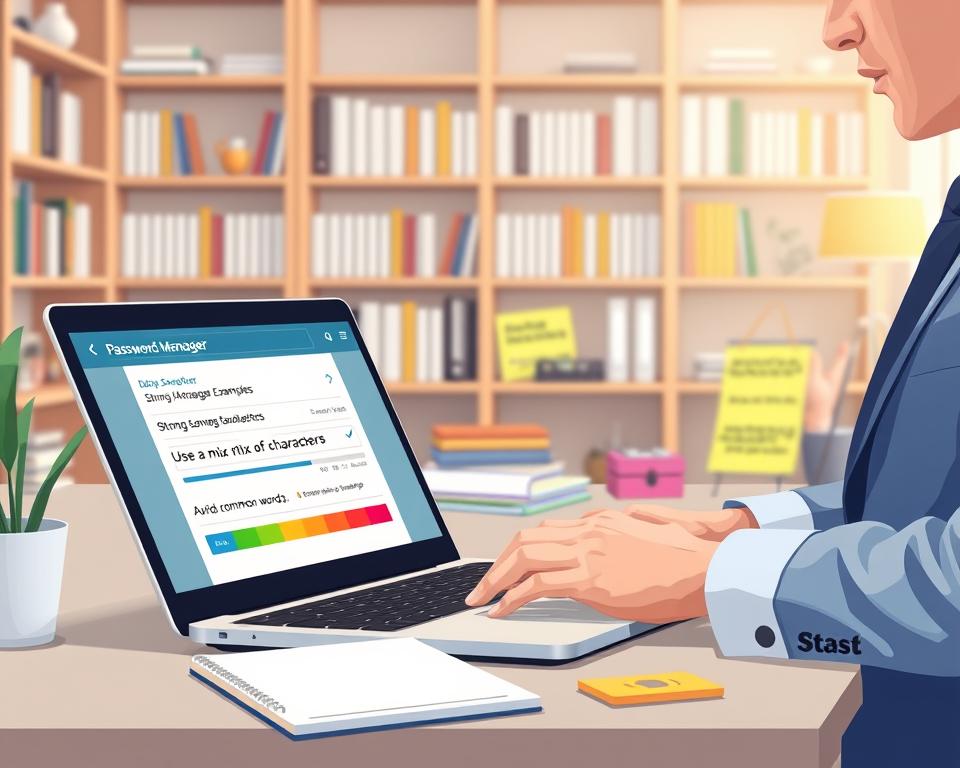
Did you know many online accounts are hacked because of weak passwords? As we spend more time online, password security is key to keeping our identities safe. With cyber threats on the rise, protecting your online space is more critical than ever.
I’ll show you why strong passwords are vital and share tips on how to make them. By mixing letters, numbers, and special characters, you boost your online safety. For more help, check out the University of Toronto’s guide on crafting strong passwords.
Key Takeaways
- Use a mix of letters, numbers, and special characters to make your password secure.
- Avoid using common words or phrases that can be easily guessed.
- Opt for a passphrase, which is typically longer and easier to remember.
- Use different passwords for each service to prevent multiple accounts from being compromised.
- Consider using a password manager to securely store and organize your credentials.
Why Strong Passwords Matter
Strong passwords are key to keeping your online world safe. They act as a shield against cyber threats. In today’s digital world, your security depends on the passwords you choose.
Weak passwords can let hackers into your personal and work data. This can lead to money loss, identity theft, and more. So, it’s important to know the dangers of weak passwords.
The Risks of Weak Passwords
Weak passwords make you vulnerable to cyber attacks. Hackers use tools to guess your passwords. They might try common ones or use brute-force attacks.
- Simple passwords like “123456” or “password” are easily guessed.
- Not changing your password often makes it weak over time.
- Using the same password everywhere is risky.
Real-Life Consequences of Password Breaches
When passwords are breached, the effects can be serious. Here are some examples:
| Consequence | Description | Impact |
|---|---|---|
| Financial Loss | Unauthorized transactions or theft of financial information. | High |
| Identity Theft | Personal data misuse for fraudulent activities. | Severe |
| Reputation Damage | Loss of trust due to compromised personal or professional data. | Significant |
How Strong Passwords Protect You
Strong passwords are your first line of defense. They make it hard for hackers to get into your accounts. By using complex, unique passwords, you lower the risk of unauthorized access.
Best practices for password creation include mixing letters, numbers, and special characters. Using secure password generation tools, like password managers, can also help.
Understanding the value of strong passwords is key. By following password security tips, you can keep your online identity safe. This helps protect your digital world.
Characteristics of a Strong Password
A strong password is hard to guess and crack. It has several key factors. These make it not just strong, but also easy to remember.
Length vs. Complexity
There’s a debate on whether length or complexity matters more for passwords. Length is how many characters your password has. Complexity is about mixing uppercase and lowercase letters, numbers, and special characters.
“Password security is not just about complexity, but also about length. A longer password with a mix of characters is significantly harder to crack.”
I think both length and complexity are important. A long password with different types of characters is much safer than a short, simple one.
A password like “P@ssw0rd” is weak, even though it’s complex. It’s short and common. But “Giraffe#LemonTree88!” is stronger. It’s long and has a mix of characters.
Avoiding Predictable Patterns
A strong password should not follow predictable patterns. Avoid sequential numbers, common words, or personal info like your name or birthdate. Hackers use algorithms to guess these patterns, making your password easy to crack if it’s not unique.
To make a strong password, be random and avoid anything related to you. Use a mix of unrelated words, numbers, and symbols. This will make your password much stronger.
The Importance of Randomness
Randomness is essential for a strong password. The more random your password is, the harder it is to guess or crack. Avoid dictionary words, common phrases, or anything related to you.
Using a password manager can help you create truly random passwords. These tools can make complex, unique passwords for each account. This ensures you have strong, random passwords that are hard to crack.
Tips for Creating Strong Passwords
Let’s dive into the best ways to make passwords that are safe and easy to remember. Having strong, unique passwords is key to keeping your online world safe.
Use a Password Manager
Using a password manager is a top strategy for managing strong passwords. These tools create complex, unique passwords for each account. They also keep them safe, so you don’t have to remember them all. I suggest using a trusted password manager to make managing complex passwords easier.
Incorporate Symbols and Numbers
Mixing symbols, numbers, and letters in your passwords is important. This makes it tough for hackers to guess or crack them. Adding random numbers or special characters to a word can make it much safer.
Make it Unique for Each Account
Using the same password for many accounts is risky. If a hacker gets into one account, they might get into others with the same password. It’s best to have a unique password for each account. A password manager can help by storing all your unique passwords safely.
By following these tips, you’ll create complex passwords that are safe and unique. This boosts your online security and gives you peace of mind. You’ll know you’re protecting your digital identity well.
The Role of Two-Factor Authentication
Two-factor authentication is a big step up in online security. It adds an extra layer of protection. This makes it much harder for unauthorized access to your accounts.
What is Two-Factor Authentication?
Two-factor authentication (2FA) requires two different ways to get into an account. You might need something you know (like a password), something you have (like a phone), or something you are (like a fingerprint).
By using these two factors, 2FA makes it tough for hackers to get into your accounts. Even if they have your password, they won’t get in without the second factor.

How it Enhances Your Security
2FA adds an extra layer of security. It makes it hard for hackers to get into your accounts with just your password. This lowers the risk of phishing attacks and unauthorized access.
For example, if a hacker gets your password through phishing, they can’t get into your account. They need the second factor, like a code sent to your phone or a biometric scan.
Setting Up Two-Factor Authentication
Setting up 2FA is easy and can be done in your account settings on most platforms. Here’s how:
- Go to your account settings on the platform you want to enable 2FA for.
- Look for the security or login settings section.
- Find the option to enable two-factor authentication.
- Choose your preferred method of 2FA, such as SMS, authenticator app, or biometric data.
- Follow the prompts to complete the setup process.
| 2FA Method | Security Level | Ease of Use |
|---|---|---|
| SMS-based 2FA | Medium | High |
| Authenticator App | High | Medium |
| Biometric 2FA | Very High | High |
By enabling two-factor authentication, you’re making a big step towards better online security. You’re protecting your digital identity.
Common Password Mistakes to Avoid
Many people make simple mistakes with passwords, which can be very harmful. It’s not just about creating a strong password. It’s also about avoiding common errors to keep your online world safe.
Using Personal Information
One big mistake is using personal info in passwords. This includes names, birthdays, and anniversaries. Avoid using any info that’s linked to you or your family. This makes your password much weaker.
Reusing Old Passwords
Another big mistake is using the same password for many accounts. If a hacker gets into one account, they might get into others too. It’s key to use different passwords for each account to stop a breach from spreading.
Ignoring Updates and Best Practices
Not keeping up with password updates and best practices can put your accounts at risk. Regularly changing your passwords and knowing the latest security tips can really help. Make it a habit to check and update your passwords often.
Knowing these common mistakes and avoiding them can greatly improve your online safety. Strong, unique passwords and careful password management are key to protecting your digital identity.
How to Remember Strong Passwords
Remembering complex passwords is a big challenge. As we use unique passwords for many accounts, it gets harder. Here, I’ll share tips to help you remember strong passwords and keep your online security strong.
Mnemonic Devices
A mnemonic device helps you remember by linking new info to something familiar. For passwords, turn a sentence into a mnemonic by taking the first letter of each word. For example, “My dog’s name is Max” becomes “MdniM.” Add numbers and symbols to make it stronger, like “MdniM!23.”
Example of Mnemonic Devices:
- Sentence: “I love to travel to Paris every year”
- Mnemonic: “IlttPEy”
- Strong Password: “IlttPEy!88”
Password Creation Strategies
Creating a consistent password strategy is key. Use a mix of words, numbers, and symbols that are personal but hard to guess. Try a passphrase, a sequence of words that’s easy for you but hard for others. For more ideas, check out PCMag’s guide on remembering strong passwords.
| Strategy | Description | Example |
|---|---|---|
| Mnemonic Device | Using the first letter of each word in a memorable sentence | “My cat is happy” becomes “Mcih” |
| Passphrase | A sequence of words that is easy to remember | “Correct Horse Battery Staple” |
| Combination | Mixing words, numbers, and symbols | “Tr0ub4d3!K1ng” |
Writing Down Passwords Safely
Writing down passwords is risky, but there are safe ways to do it. Keep the paper in a safe or locked cabinet. Or, use a password manager to store all your passwords with just one master password. For extra security, consider a physical password manager that keeps your passwords offline.
Changing and Updating Passwords Regularly
Updating my passwords regularly is key to keeping my online world safe. With new security threats popping up all the time, it’s vital. Changing my passwords often helps keep my accounts safe from hackers.
When to Change Your Passwords
Knowing when to update your passwords is important. I change mine if I’ve heard about a data breach or use the same password everywhere. Also, if something seems off on my accounts, I update right away.
It’s also a good idea to change passwords if you’ve had the same one for a long time. The longer it’s the same, the more likely it is to get stolen.
How Often Should You Update?
How often to update passwords is a common question. For important accounts, aim for every 60 to 90 days. For less critical ones, every 6 to 12 months is okay. But, it really depends on the account and how secure it needs to be.
The Benefits of Regular Updates
Updating passwords often has many benefits. It lowers the chance of data breaches and unauthorized access. By changing them, I make sure even if a password is stolen, it won’t last long. This is a big part of creating complex passwords and secure password techniques.
It also pushes me to use different and strong passwords. This is a big help in keeping my online world safe. It’s a step that goes hand in hand with other security steps, like two-factor authentication.
By making password updates a regular part of my online routine, I’m doing a lot to protect my digital self. This, along with other security steps, makes my online presence much safer.
Testing Your Password Strength
With cyber threats increasing, checking your password strength is key. We use digital platforms for many things, so strong passwords are vital.
Testing your password regularly spots weak points. This lets you fix them and boost your online safety.
Online Tools for Checking Password Strength
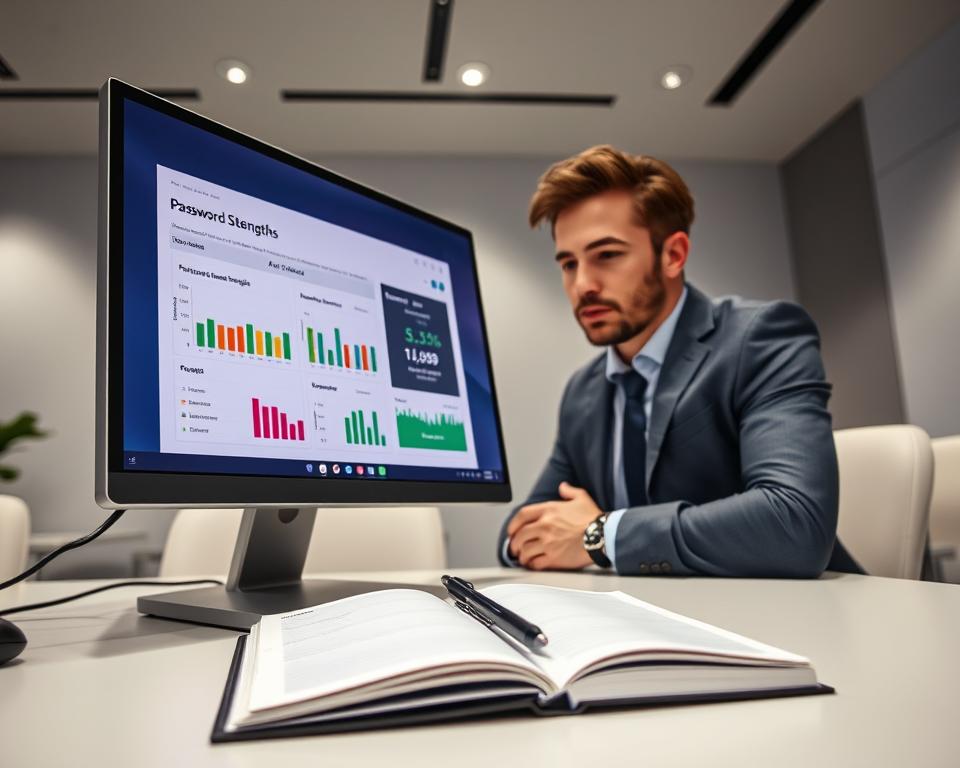
Many online tools can check your password’s strength. They look at length, complexity, and the use of special characters. Tools like password strength analyzers and security software are popular.
These tools give you feedback on your password. They also suggest ways to make it stronger.
Assessing Vulnerabilities
When checking your password, look for weaknesses. Check if it’s been in data breaches or if it’s easy to guess. Also, see if it uses the same characters too much.
Knowing these weaknesses helps you make your password better.
Making Improvements Based on Feedback
After checking your password, use the feedback to improve it. You might make it longer, add special characters, or avoid common patterns.
| Improvement Strategy | Description | Benefit |
|---|---|---|
| Lengthen Your Password | Add more characters to your password. | Increases security against brute-force attacks. |
| Use a Mix of Characters | Incorporate uppercase, lowercase letters, numbers, and special characters. | Enhances complexity, making it harder to guess. |
| Avoid Common Patterns | Steer clear of easily guessable information such as names, birthdays, or common sequences. | Reduces the risk of your password being compromised. |
By using these tips, you can make your password much safer. This protects your online identity and personal info.
Conclusion: My Personal Best Practices
Online security is key, and creating strong passwords is a big part of it. By using the tips we’ve shared, you can keep your online identity safe. This is all about making sure your passwords are secure.
Key Takeaways
We’ve talked about how long and complex passwords should be. We also covered the importance of two-factor authentication. And, we shared ways to remember unique passwords for each account.
Top Recommendations
I suggest using a password manager to keep your passwords safe. Make sure to update your passwords often. Adding symbols and numbers will also boost your security.
Getting Started
Now, it’s time to put what you’ve learned into action. Check your current passwords and make any needed changes. Find a password management method that fits your lifestyle. Doing this will greatly improve your online safety and protect your digital identity.